Parents

Research
Mar 25, 2026
Looking for Diamonds and Found Gold

Andrew Z
Research Fellow

Minecraft, but Real
Gold has carried deep symbolic and monetary value throughout history, but there is an entire industry behind its production: gold mining. Gold mining refers to the process of exploring, extracting, processing and refining gold ore deposits.
Gold ore is rock that contains gold in concentrations high enough to be mined profitably, and it is found in two main forms: lode deposits and placer deposits. Lode deposits, also known as primary deposits, form within the Earth’s crust, usually as a result of hydrothermal activity. These deposits are embedded in gold-bearing rock and often require more intensive drilling and underground extraction methods. Placer deposits, by contrast, are secondary formations created when primary gold sources are broken down through weathering and erosion. Over time, wind, water and other natural forces break apart the host rock, and the heavier gold particles are transported by rivers or glaciers. Because gold is dense, it settles in low-energy environments such as stream beds. These deposits are often the most accessible and can contain nuggets or flakes.
Geologists first identify areas that may contain gold-bearing ore through aerial surveys, satellite imagery, etc. Once a deposit is confirmed, companies determine a mining method. If the ore body is shallow and low grade, open-pit mining is generally the most efficient approach. If the deposit lies deeper underground and contains higher-grade ore, underground mining is typically the better choice.
In 2023, domestic gold mine production in the United States was estimated at 170 tons. Gold was produced at more than 40 lode mines across 11 states, along with several large placer mines in Alaska and numerous smaller placer operations, mostly in Alaska and other Western states. Production remains highly concentrated geographically. Nevada was the leading gold-producing state, accounting for about 73% of total domestic output, followed by Alaska, which contributed roughly 13%.
Despite some softness in output levels, gold prices reached record highs in 2024 such that the estimated US production value of gold increased by nine percent in 2024, despite a decrease in quantity. This highlights how sensitive the industry is to price movements: higher market prices can more than offset lower production volumes. In fact, gold was also the principal contributor to the total value of US metal mine production in 2024, accounting for 11% of the total estimated value of US nonfuel mineral commodity production.
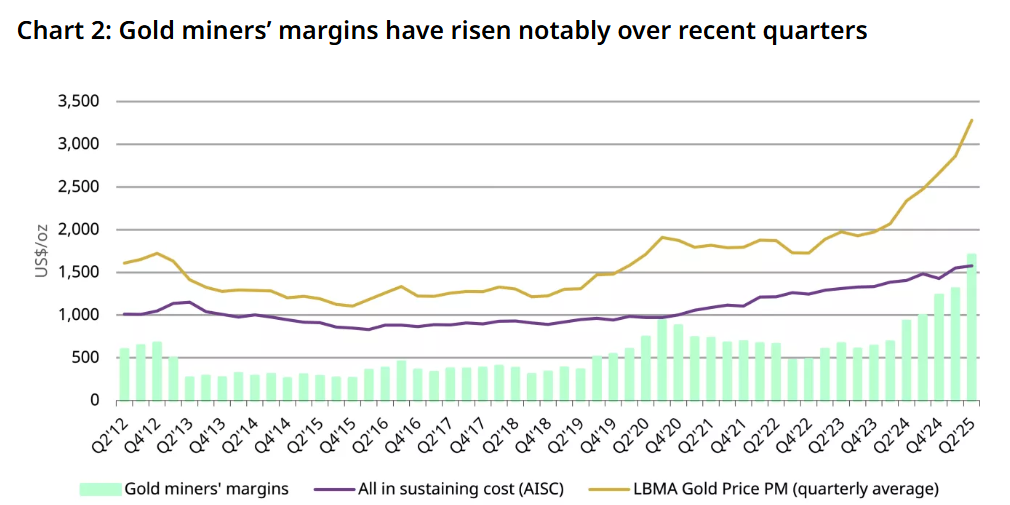
Although gold mining has seen success, there are still important shifts that continue to unfold, which should capture the attention of retail investors. In particular, three trends stand out: rising gold prices driven by strong investment and central bank demand; growing technology demand from electronics, AI hardware and advanced manufacturing; and improved exploration methods that allow the industry to overcome its problem of lack of sites.
Source: World Gold Council
More Gold!!
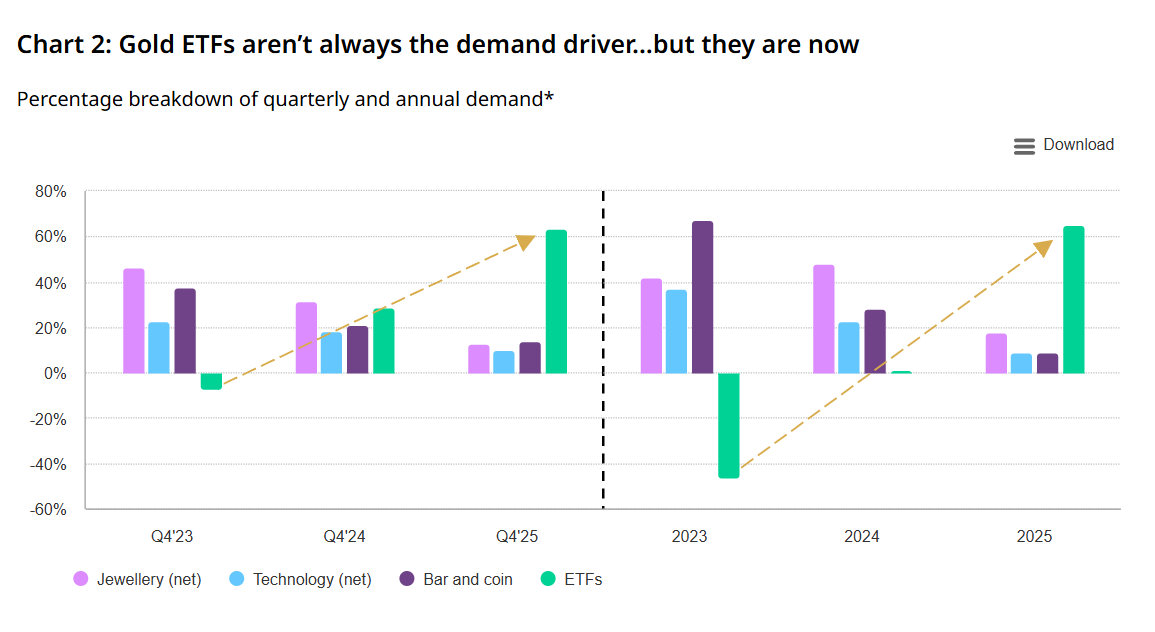
The gold industry is the surge in investment demand, particularly from exchange-traded funds (ETFs) and central banks. In 2025, total US gold demand rose to 679 tons. This was primarily composed of investment demand, especially physically backed gold ETFs. As investors navigated uncertainty (heightened geopolitical tensions and US dollar weakness), gold regained its role as a safe-haven asset and portfolio diversifier.
Physically backed gold ETFs recorded their strongest year of inflows on record at $89 billion, with annual demand reaching 801 tons — the second-highest annual total ever. The US in particular was an investment demand powerhouse, with US-listed ETFs attracting $50 billion of inflows and 437 tons of demand, representing over half of global ETF totals. Gold prices hit 53 record highs during the year. The past three years also saw more than 1,000 tons in consecutive annual central bank purchases, driven by diversification away from US dollar reserve holdings. Global official gold holdings now total nearly 36,200 tons, accounting for about 20% of total official reserves.
Source: World Gold Council
In line with past increases in investor and central bank demand, buying is expected to remain strong at around 585 tons per quarter. For 2026, JP Morgan forecasts ongoing robust investor demand, with approximately 250 tons of ETF inflows expected in 2026. While ETF ownership as a share of total investor gold holdings has grown by about 1 percentage point over the past 2 years, there remains room for that share to expand toward 5%, suggesting a potential structural diversification in the coming years. Central bank purchases are projected to reach around 755 tons — below the recent peaks but still well above pre-2022 averages of roughly 400 to 500 tons.
For gold miners, this matters directly. Strong investment and central bank demand supports higher gold prices, and higher prices expand profit margins. JP Morgan Global Research estimates that changes in investor and central bank demand explain roughly 70% of the quarter-on-quarter movement in gold prices. On average, around 350 tons of quarterly net demand from investors and central banks is needed to keep prices stable. Every additional 100 tons above that threshold has historically been associated with roughly a 2% rise in gold prices. When gold prices rise, deposits that were previously too expensive to mine can suddenly become economically viable. Thus, stronger financial demand does not just move the price of gold — it directly improves the economics of gold mining and supports long-term industry growth.
Gold Isn’t Just Shiny
While investment flows often dominate headlines, industrial use of gold is quietly expanding alongside advances in computing and communications. In the first nine months of 2024, technology demand for gold increased nine percent year over year to 244 tons. The growth was driven in part by the launch of new electronic products and increasing adoption of high-performance computing technologies.
Gold plays a critical role in the electronics sector because of its unique physical properties. It is an excellent electrical conductor, efficiently dissipates heat, and, unlike copper or silver, does not oxidize or corrode over time. It is also highly malleable, meaning it can be formed into extremely thin wires and sheets. These characteristics make gold especially valuable in advanced hardware such as processors, memory chips and sensors used in AI-enabled devices, where precision and long-term stability are essential.
As technology continues to evolve, gold’s role becomes even more important. In AI and quantum computing, gold is used in cutting-edge processors and cooling systems. Certain solar panel technologies incorporate gold to improve efficiency and lifespan. In telecommunications, gold is essential for high-speed data transmission with minimal signal loss. 5G, for instance, allows smartphones and devices to download data much faster and handle more connected users at once. Building 5G networks requires new antennas and signal processors that use gold to ensure fast and reliable data transmission. WiFi 7 is the next generation of wireless internet used in homes and offices; however, WiFi 7 equipment requires more power amplifiers, which are electronic components that boost wireless signals. These amplifiers use gold in their internal circuitry, increasing overall gold demand.
For gold miners, this trend provides a structural layer of demand beyond financial investment. While technology demand is smaller than investment demand in absolute terms, it is tied to established long-term global growth areas such as AI, and next-generation connectivity. As these industries expand, they create a steady industrial base of demand that reinforces the end business of gold mining.
Hide and Seek
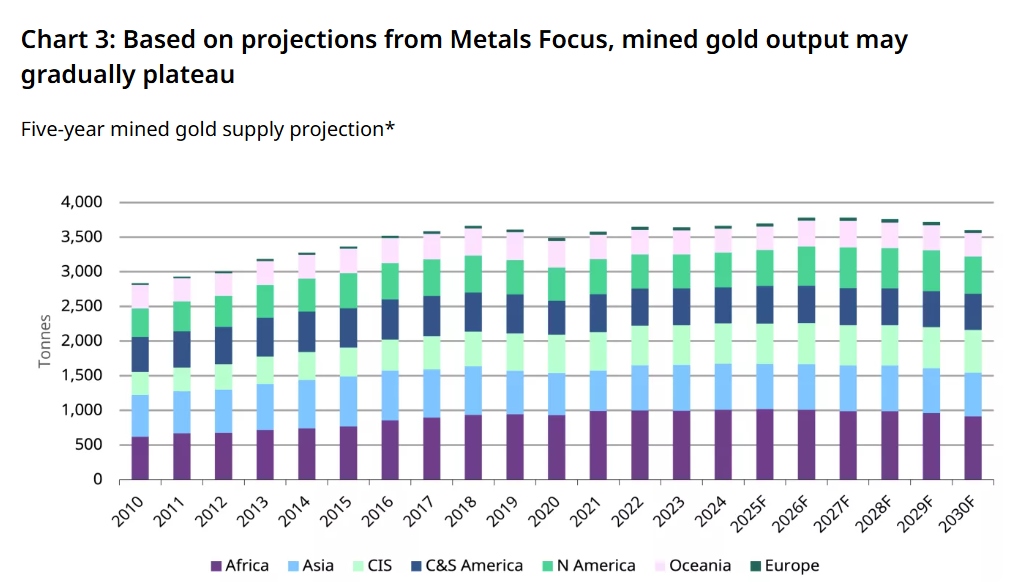
One of the most persistent obstacles of gold mining is difficulty in discovering new sites. Gold remains the most explored commodity in the world, accounting for 44% of global exploration budgets. In 2024, the global gold exploration budget is estimated at $5.6 billion. At the same time, global mined gold production has shown little annual change between 2018 and 2024. In the first three quarters of 2025, gold production totaled 2,717 tons, a 1.6% increase. The modest growth in output has raised important questions about whether global production is approaching structural limits.
Source: World Gold Council
A key reason for slow supply growth is that the mining process itself is long and capital intensive. It can take years to discover a deposit, secure permits, conduct feasibility studies and construct a new mine. As a result, production cannot easily be ramped up in the short term, even when prices are strong. Major discoveries have become less frequent, and many existing mines are aging, gradually producing less over time. In fact, only 0.1% of prospective sites become productive gold mines.
To deal with these challenges, mining companies are turning to better technology to help them find gold more efficiently. Satellites can take detailed images of the Earth’s surface to look for rocks and minerals that are often found near gold. Some sensors can even detect small differences in heat underground, which may signal the presence of certain geological systems where gold forms. Special laser-based mapping tools can measure tiny changes in land elevation, which might reveal signs of past geological activity. Aircraft equipped with scientific instruments can also scan large areas to detect hidden rock structures beneath the surface.
Artificial intelligence is playing a growing role as well. Computers can now analyze huge amounts of geological data much faster than humans can. By spotting patterns in maps, rock samples and survey results, AI systems can suggest where gold is more likely to be found. Companies combine all this information to create smarter maps that guide drilling decisions. Some remote sensing tools can even pick up small changes in plant health caused by subtle differences in soil chemistry, which can sometimes indicate gold buried below.
Together, these technologies help mining companies reduce wasted time and money while improving their chances of making new discoveries. As deposits become harder to find and develop, companies that successfully leverage advanced technologies may gain a competitive advantage.
What to Consider
While gold is a centuries-old commodity, these modern trends show that the industry is far from stagnant. Financial demand strengthens profitability, technological growth creates steady industrial use and smarter exploration tools help secure future supply. Together, these factors position gold mining as a mature industry that is still evolving in meaningful ways for investors. Investors may consider:
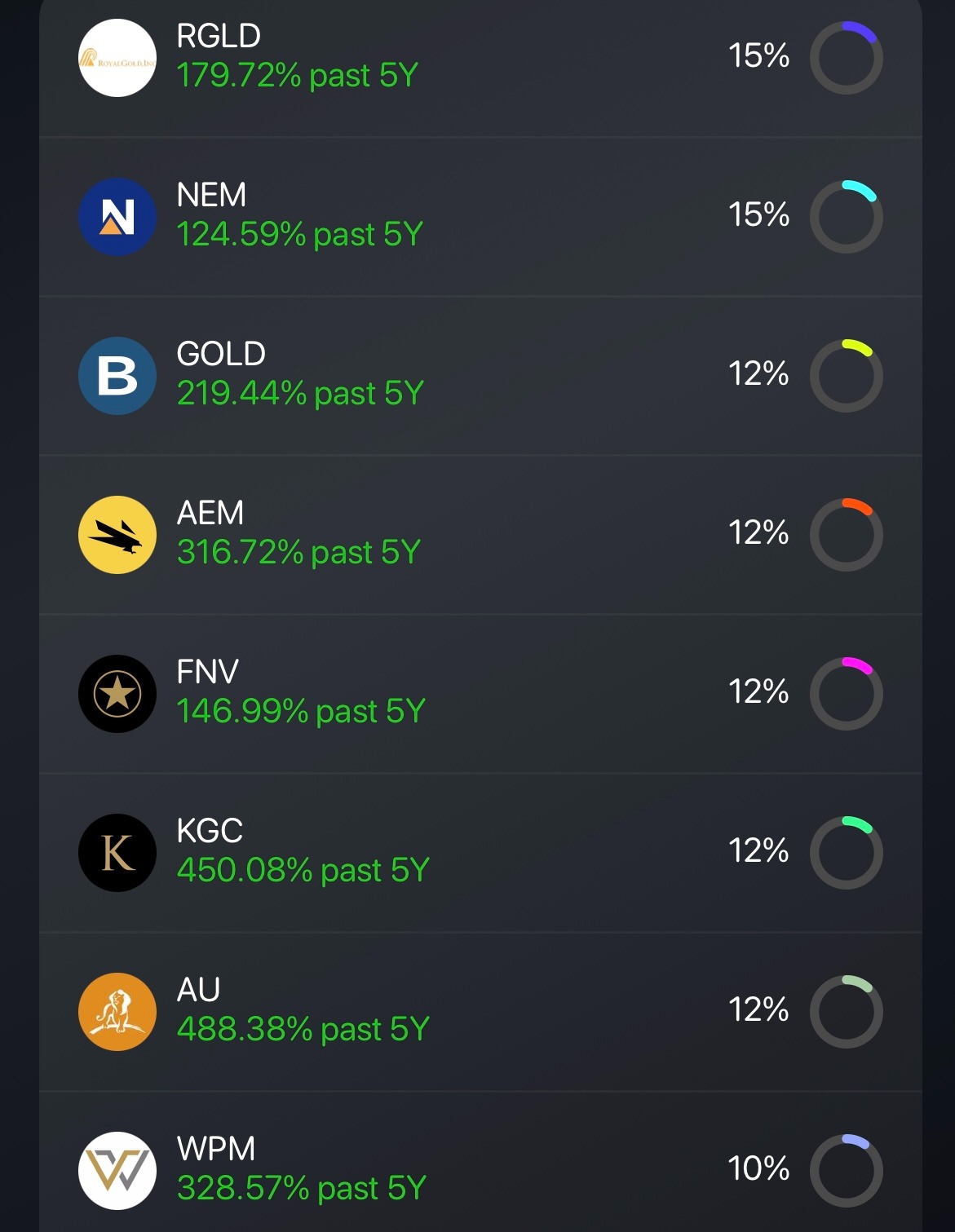
- Large-cap gold producers positioned to benefit from sustained high gold prices, operating leverage, and exploration upside:
- Newmont Corporation (NEM)
- Barrick Gold (GOLD)
- Agnico Eagle Mines (AEM)
- Kinross Gold (KGC)
- Mid-tier and growth-oriented producers with higher sensitivity to gold price upside and production expansion:
- Alamos Gold (AU)
- Royalty and streaming companies offering lower operational risk and strong cash flow leverage to gold prices:
- Franco-Nevada (FNV)
- Wheaton Precious Metals (WPM)
- Royal Gold (RGLD)
And you can get invested in these through a custom portfolio created by Bloom:
Disclosure: This material is provided for informational purposes only and is not intended to constitute, and should not be relied upon as, investment advice, a recommendation, or a solicitation to buy or sell any securities. Nothing contained herein is intended to be, or should be construed as, an offer to sell or a solicitation of an offer to purchase any security or investment product. Any investment decisions should be made only after careful consideration of the applicable risks and, where appropriate, consultation with qualified financial, legal, or tax professionals.